
Types of Dust Extractor Filters Explained: Which Does Your Site Need?
Understanding types of dust extractor filters is essential when selecting the correct dust extraction system for industrial environments. Dust extraction is a key process used to control dust, improve air quality, and maintain a clean working environment across a wide range of industrial applications.
Dust extractors are essential for protecting health and reducing exposure to dust and fumes generated during industrial processes. The benefits of a dust filter plant include enhancing environmental safety and operator protection, as well as improving air quality and process efficiency.
A properly designed dust extraction system can enhance dust extraction performance, filtration efficiency, and overall process efficiency, supporting safe operation in environments where dust is present.
Dust collection systems operate by drawing process dust and particulates from the air through a filtration system that separates contaminants before releasing cleaned air back into the environment.
Dust extraction is widely used across industrial applications where airborne particles must be controlled to maintain safe working conditions.
What Is a Dust Extraction System?
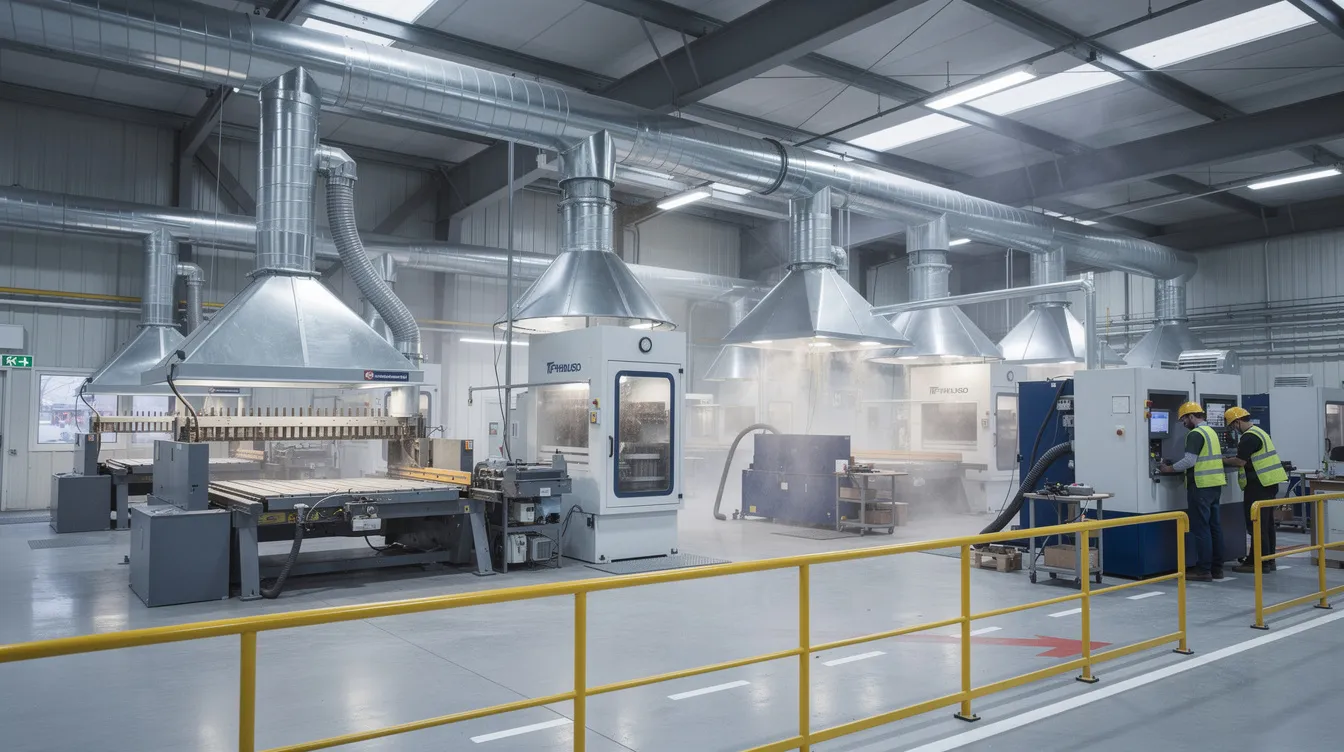
A dust extraction system is designed to remove dust, fumes, and airborne particles generated during industrial processes. A dust extractor is the main unit responsible for creating airflow and capturing dust at source, and these systems are commonly installed in facilities such as industrial or production environments.
Dust extraction systems are commonly used in industrial environments and facilities where dust levels can build up quickly and affect both equipment and health.
A typical dust extraction system includes:
-
Dust extractor unit
-
Filtration system
-
Fan for airflow
-
Ducting network
-
Accessories such as hose, collection components, and tools that can be integrated for improved dust management
Together, these components form an integrated system designed to support dust collection and maintain clean air in the workplace.
Types of Dust Extractor Filters
There are different types of dust extractor filters used depending on dust type, volume, and industrial requirements. These filter types are selected based on performance needs and safety standards.
Dust extractor filters are categorised by safety class, physical design, filter media material, shape, and the direction of airflow. The material used in the filter media, the shape of the filter (such as cylindrical or flat), and the orientation from which dusty air flows through the filter all impact filter performance and suitability for specific applications.
Cartridge Filters
Cartridge filters are widely used in dust extraction systems due to their high efficiency and compact design. These filters often utilise cloth or fabric media, which provides a larger filtration surface and allows for easier maintenance.
Cartridge filters are commonly used in dust extractors where fine dust and particles must be captured efficiently. They maximise filtration area within limited space, making them ideal for environments where space is constrained or at a premium.
They are suitable for:
-
Fine dust filtration
-
Continuous dust extraction
-
Industrial dust collection systems
Cartridge filters are used in environments where consistent dust extraction performance is required across processes. They are also designed to minimise pressure drop, helping to maintain optimal system performance.
Nanofibre cartridge filters offer the highest MERV rating possible for standard filters, providing an increased lifespan and superior ability to trap particulate matter.
Bag Filters
Bag filters are designed for handling large volumes of dust in industrial dust collection systems. These filters are typically made from cloth or fabric materials, which enhance their filtration efficiency and system design. Baghouse filters are also categorised according to their shape, such as cylindrical or flat, and this shape can impact their performance.
Bag filters are commonly used in dust extraction systems where large quantities of dust are generated during continuous processes. Baghouse filters can achieve efficiency levels of up to 99% by mechanically separating particulate matter from an incoming air stream.
They are suitable for:
-
High volume dust collection
-
Heavy industrial processes
-
Continuous operation environments
Woven filters feature a repeating pattern that keeps gaps between the fibres small, making them effective for mechanical shakers and reverse air baghouse filters. Nonwoven filters are used in pulse-jet baghouse systems to effectively remove extremely small-sized aerosols, contaminants, and dust particles. Nomex/Aramid filters are suitable for high-temperature applications up to 204°C and are commonly used in foundries, mining, and smelting.
Bag filters are widely used in dust collectors operating in demanding industrial environments.
HEPA Filter
A HEPA filter is used in dust extraction systems where fine particles and hazardous dust such as silica dust must be controlled.
HEPA filters are essential in environments where air quality and health protection are critical.
HEPA filters are commonly used where:
-
Silica dust is present
-
High efficiency filtration is required
-
Sensitive environments must be protected
HEPA filters are used in dust extraction systems to ensure clean air and protect health in industrial environments.
PTFE Filters
PTFE filters are used in dust extraction systems operating in demanding industrial environments.
PTFE membrane cartridges are especially effective for capturing fine or sticky dust due to their non-stick properties.
They are used to:
-
Maintain stable filtration performance
-
Reduce clogging in high dust environments
-
Support continuous dust extraction
PTFE filters are ideal for industrial dust conditions requiring long-term efficiency.
Wet Scrubbers
Wet scrubbers are used in dust extraction systems where dust and fumes must be controlled using liquid-based filtration.
Wet scrubbers are commonly used where:
-
Explosive dust risks are present
-
Fumes and dust need to be captured and removed directly at the source of emission, allowing the system to extract fumes directly for improved safety and cleanliness
-
Dry filtration is not sufficient
Wet scrubbers support dust control in high-risk industrial environments.
Key Factors That Determine Filter Choice
Filter selection depends on several important factors:
-
Dust type and toxicity
-
Volume of dust generated
-
Industrial processes involved
-
Airflow and system capacity
-
Moisture content
-
Safety requirements
Choosing the right filter can prolong the lifespan of your tools and accessories, improving efficiency and reducing maintenance needs. It is also important to consider that some filters are prone to damage or internal issues in certain environments, so selecting a durable and compliant system is essential, especially in hazardous or explosive dust conditions. During the purchase of a dust extractor, especially for M Class and above, always consider legal and safety requirements to ensure compliance with health and safety regulations. The best filter is the one that suits your specific application and dust type, as well as the working environment.
Industrial dust extractor filters are selected based on particle size, toxicity, moisture content, and volume of the dust, often classified into L, M, and H classes for regulatory compliance. Standard polyester filters are suitable for general-purpose dry dust extraction, while anti-static filters are used to prevent static charge build-up in explosive dust environments. Spunbond polyester filters are durable, washable, and ideal for high-moisture or chemical environments. Polyester filters resist chemicals and abrasion and are suitable for dry heat environments, but they are not ideal for humid conditions as they can be easily damaged. Fibreglass filters are recommended for industries with high acid concentrations, but should be avoided in environments with high levels of hydrofluoric acid, chlorides, cyanides, and bromides.
Dust Extraction Systems Explained
Different types of dust extraction systems are used depending on industrial applications and dust levels.
Dust collection systems operate by drawing dust and particulates through a filter that captures and separates contaminants before releasing clean air back into the environment.
Reverse Pulse Jet Dust Collectors use a jet of air to clean filters, allowing continuous operation and high efficiency in industrial environments.
A well-maintained baghouse dust collector can achieve efficiency levels of up to 99% by mechanically separating particulate matter from an incoming air stream.
Dust Extraction in Industrial Environments
Dust extraction is essential in industrial environments where dust, fumes, and particles are produced during processes. Efficiently containing and removing collected dust is crucial for maintaining a safe and clean environment.
Dust extractors are essential for maintaining a clean working environment and reducing respiratory risks caused by airborne dust particles.
A properly designed dust extraction system:
-
Improves air quality
-
Reduces contamination
-
Enhances workplace safety
-
Supports efficient industrial processes by helping complete the job efficiently and saving time
Efficient dust extraction can also save money by reducing equipment maintenance and downtime.
Without effective dust extraction systems, dust can accumulate quickly and negatively affect health and equipment performance.
Filter Classes and Safety Standards
Regulatory bodies define three main classes of filtration in accordance with UK regulations and standards:
-
L-Class for softwoods
-
M-Class for hardwoods and concrete
-
H-Class for high-risk dust such as silica dust
Choosing the correct class of dust extractor is crucial, as each class is designed for different levels of dust hazards and operational requirements, and compliance with UK-specific health and safety laws is essential.
Maintenance and System Performance
Maintaining dust extraction systems is essential for consistent performance.
This includes:
-
Cleaning filters regularly
-
Inspecting ducting and airflow paths
-
Monitoring system performance
-
Replacing worn filters when required
-
Monitoring the pressure applied during pulse cleaning cycles to ensure effective filter cleaning
In reverse pulse jet dust collectors, adjusting the length of the pulse in the control unit helps optimise cleaning cycles.
The efficiency of a dust extractor is influenced by airflow and vacuum generation capabilities, which are critical for effective dust collection.
Cost and System Selection
Price varies depending on:
-
Dust extraction system capacity
-
Filter types and materials
-
Industrial application requirements
-
Performance expectations
-
Maintenance needs
Dust extractors generally vary in price depending on system design and operational requirements.
What Type of Filter Is Best for Dust?
The best filter depends on the application:
-
HEPA filter for silica dust and hazardous environments
-
Cartridge filters for general industrial dust extraction
-
Bag filters for large volumes of dust
-
PTFE filters for sticky or fine dust
Each filter type is designed for different dust extraction requirements in industrial environments.
Which Is Better: H Class or M Class Dust Extractor?
H Class dust extractors are used for hazardous dust such as silica dust and high-risk environments.
M Class dust extractors are used for medium-risk dust such as wood and concrete dust.
Both classes are designed to ensure safe dust extraction and compliance with regulations.
Selecting the correct dust extraction system, dust extractor, and filter types is essential for maintaining safe and efficient working environments.
Different types of dust extractor filters play a critical role in controlling dust across industrial environments, ensuring effective dust extraction and reliable system performance.
Why Choose A1 Extraction Systems?
Choosing the right partner for your dust extraction system is just as important as selecting the correct dust extractor or filter types. We specialise in designing, supplying, and maintaining industrial dust collection systems tailored to real working environments.
With extensive experience across industrial applications, we understand how dust extraction, airflow, and filtration system design work together to protect health, improve performance, and maintain compliance in demanding environments.
We provide a full end to end service, including design, installation, maintenance, and ongoing support, ensuring every dust extractor system continues to operate efficiently over time. This helps reduce downtime, improve safety, and maintain consistent dust control across a wide range of processes.
Whether you are dealing with silica dust, explosive dust risks, or high volume dust extraction requirements, we deliver practical, compliant solutions built around your working environment and operational needs.
Frequently Asked Questions
What are the main types of dust extractor filters?
The main types of dust extractor filters include cartridge filters, bag filters, HEPA filters, PTFE filters, and wet scrubbers. Each filter type is designed to handle different dust characteristics, from fine particles to large volumes and hazardous materials, depending on the application.
How do I choose the right dust extractor filter for my site?
Selecting the correct filter depends on factors such as dust type, particle size, volume, moisture content, and any health risks. For example, hazardous dust like silica dust requires a HEPA filter, while high-volume industrial processes typically use bag filters.
What is the difference between cartridge filters and bag filters?
Cartridge filters are compact and provide high-efficiency filtration for fine dust, making them suitable for controlled environments and limited space. Bag filters are designed for handling large volumes of dust and are commonly used in heavy-duty industrial dust collection systems.
When should a HEPA filter be used in a dust extraction system?
A HEPA filter should be used when dealing with hazardous or very fine particles, such as silica dust. These filters capture up to 99.97% of particles as small as 0.3 microns, making them essential for maintaining safe air quality in high-risk environments.
Are wet scrubbers better than dry filtration systems?
Wet scrubbers are not universally better but are more suitable in specific conditions, such as when dealing with explosive dust or when fumes need to be captured directly at the source. Dry filtration systems are typically more common for standard dust extraction applications, while wet scrubbers are used in higher-risk or specialised environments.