
An extraction system does not always fail all at once. In most cases, the loss of performance appears gradually. The air feels heavier, heat starts to build up, dust begins to accumulate more quickly, odours take longer to dissipate, and energy costs rise without it being immediately clear why.
In industrial environments and commercial kitchens, this type of change is often interpreted as normal wear and tear. However, in the United Kingdom, adequate ventilation and control of airborne contaminants are not an operational luxury. They are part of health, safety, and compliance protection.
The HSE makes it clear that every enclosed workplace must receive a sufficient amount of fresh or purified air, and that LEV systems must continue to function as designed to protect people. This is precisely where many companies lose money. The problem does not always require replacing the entire system.
In many existing systems, it is not the entire infrastructure that is failing, but rather the set of fans, filters, controls, hoods, seals, and duct sections that no longer keep pace with current operations. Understanding the original design of the LEV is essential to diagnosing why a system has stopped performing as it should and, from there, proposing cost-effective improvements rather than jumping straight to a total replacement.
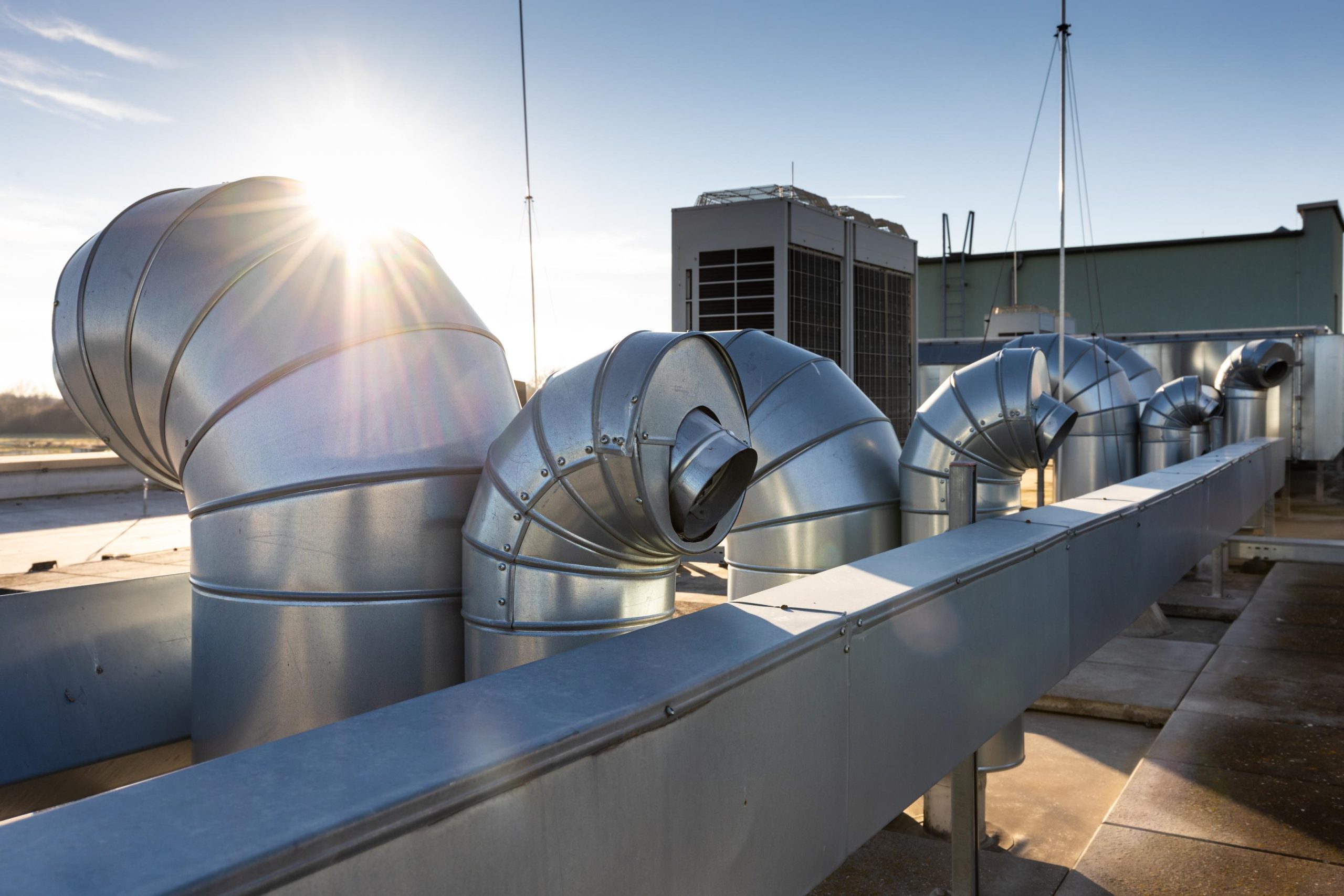
Key Takeaways
-
The decline in performance of an extraction system usually first appears in practical signs, such as poorer air quality, increased dust, persistent odours, excessive heat, abnormal noise, and higher energy consumption, even when the system still appears to be functioning.
-
Not every low-performing system needs to be completely replaced; in many cases, upgrades to filters, fans, controls, hoods, ductwork, and air supply can restore airflow, efficiency, and compliance in a more cost-effective manner.
-
In the UK, the decision between upgrade and replacement should consider not only performance and operational costs, but also compliance with LEV, maintenance and testing requirements, adequate ventilation in enclosed workplaces, and, in commercial kitchens, the balance between extraction and replacement air.
The first signs that something is wrong
The first warning sign is usually air quality. When there is more stagnant air, more persistent odours, more humidity, more suspended dust, or a greater feeling of stuffiness, this usually indicates that the airflow is no longer providing the necessary air exchange or the efficient airflow the space needs.
In workshops, production areas, and other commercial environments, it is also common to see increased dust deposits on machines and surfaces. In commercial kitchens, hot spots and excess heat can develop, causing discomfort for kitchen staff and making it harder to remove vapours, smoke, and grease consistently.
All of this points to loss of capture, inefficient exhaust, or lack of sufficient replacement air. Another important sign is the behaviour of the equipment itself. Excessive vibration, unusual noise, fans running longer, filters saturating too quickly, and recurring failures are classic symptoms of extraction systems under stress.
Many employers purchase LEV to protect the health of their workers, but later discover that it does not work as expected because it is the wrong type, was poorly installed, or is not being maintained properly. In other words, just because the system is running does not mean it is effectively controlling airborne contaminants.
It is also worth paying attention to the bills. When energy costs rise while performance drops, there is usually a loss of efficiency somewhere in the system. Leaky ducts, clogged filters, outdated controls, worn-out fans, and poorly balanced layouts force the system to consume more energy to move less air. This reduces energy efficiency, increases operating costs, and accelerates the wear and tear of mechanical components.
What is usually behind the loss of performance
In practice, few ventilation systems lose performance for a single reason. The most common cause is a combination of aging, irregular maintenance, and changes in space usage. A system design that worked well years ago may not respond in the same way after changes in layout, the addition of new equipment, increased production, or changes in contaminant profiles.
The result is that the airflow no longer matches the operational reality. In LEV systems, critical points are almost always repeated. Poorly positioned capture hoods, blocked ducts, leaks, damaged or saturated filters, inefficient fans, and high differential pressures reduce overall performance.
At A1, during a survey, items such as filter condition, duct condition, fan details, duct velocities, air volumes, pressure differential, and system effectiveness are evaluated. This is important because a system may appear acceptable to the naked eye and still be far from what it was designed to deliver.
There is also a common mistake, which is to assume that any drop in performance means it is time for a total replacement. Often, the problem lies in specific areas. A1’s philosophy goes in the opposite direction of waste.
It uses the most cost-effective methods to get suboptimal systems back in good shape. Blockages, filter cleaning, and modifications to ducts, capture hoods, and filter design often increase airflow and effectiveness without the need to replace filters prematurely or increase fan power.
Common Upgrade Measures Before Full Replacement
Before a major intervention is approved, regular inspections and regular maintenance should confirm whether the core issue lies in system design, airflow resistance, worn components, or poor balance between extract and supply. In many cases, targeted changes to fans, filters, hoods, controls, and ductwork restore efficient airflow, improve efficiency, reduce operational costs, and help the system meet current compliance requirements, industry standards, and safety standards.
Upgrade or replacement: how to make the right decision
The best decision does not come from the age of the system alone, but from the relationship between physical condition, actual performance, current requirements, and the cost of continuing to rely on short-term fixes. When the main structure is still solid, an upgrade is usually the smartest way to go.
This applies to many existing systems where the ducts are still usable, but the fans, filters, controls, sensors, or extraction points no longer meet demand. In such cases, improving efficiency is perfectly possible without dismantling the entire system.
Replacement makes more sense when the problem is structural. Corroded ducts, collection design incompatible with the process, chronic performance loss, repeated compliance failures, impossible layout to balance, inability to ensure adequate ventilation, or workplace safety risks.
If the system can no longer reliably control dust, fumes, vapours, or excessive heat, the cost of holding out a little longer is usually higher than that of a proper intervention. HSE classifies a thorough examination and test as a check to confirm that the LEV still works as well as it was originally designed to work.
When the answer is repeatedly “no,” the debate shifts from routine maintenance to reengineering or replacement. A good practical criterion is that if the system can still be adjusted to deliver adequate protection, consistent airflow, and regulatory compliance with proportionate interventions, upgrading tends to be more rational.
If, even after adjustments, it continues to fail to capture contaminants, consume too much energy, and generate operational risk, replacement becomes the best solution.
In Commercial Kitchen Ventilation, the Problem Is Often Not Just Extraction
In commercial kitchen ventilation, the analysis must go beyond the hood and exhaust fan. A system may extract air, but it can still malfunction if there is not enough replacement air. Without this balance, the kitchen enters negative pressure, outside air enters uncontrollably, the environment becomes hotter and more uncomfortable, and extraction loses stability.
For the kitchen staff, this translates into heat, poorly distributed air currents, and poorer air quality. For the operation, it means more effort from the equipment and lower efficiency. The HSE maintains specific guidance for kitchens in catering establishments, covering adequate ventilation, requirements related to Gas Safety Regulations, and characteristics of a good ventilation system.
BESA presents DW/172 as the central reference for the industry for the design, installation, and maintenance of commercial kitchen ventilation, with the current edition incorporating topics such as demand-controlled kitchen ventilation, recirculation systems, and a 2024 update on fire-resisting and smoke-control ductwork.
This shows that commercial kitchens require an integrated view of extraction, air supply, safety, and maintenance. Therefore, when a kitchen begins to suffer from odours, heat, residual smoke, accelerated grease buildup, or staff discomfort, the problem does not always require a new canopy.
Sometimes, what is needed is to rebalance the system, review the fresh air supply, correct resistance in the ducts, or update controls. In other words, replacing air extraction systems does not always mean replacing everything; it often means correcting the way extraction and replacement air work together.
When the issue becomes compliance in the UK
In the United Kingdom, poor performance is not just a technical inconvenience. It can become a compliance failure. In legal terms, the broadest basis remains the obligation to ensure sufficient fresh or purified air in enclosed workplaces. When dust, fumes, vapours, and other contaminants are generated by the process, LEV comes into play as an engineering control.
The employer must maintain the system in good condition, arrange for a thorough examination and test at least every 14 months, and keep records for at least five years. For construction, alterations, and non-residential buildings in England, Approved Document F Volume 2 remains the reference guide for compliance with Part F of the Building Regulations, in the edition that came into force in 2022.
The document deals with ventilation provision, work in existing buildings, commissioning, and operating and maintenance instructions. This is important because many projects fail not only because of the equipment, but also because of a lack of proper commissioning and clear information for use and maintenance.
The scenario has also evolved in terms of internal cleaning of ventilation systems. BSI lists BS EN 15780:2025 as the current edition of the standard for cleanliness of ventilation systems, applicable to new and existing systems, including kitchen extract systems.
BESA positions TR19 Air, in the March 2026 edition, as a benchmark for good practices for internal cleaning and hygiene of ventilation systems in commercial and public buildings. This reinforces that accumulated dirt, grease, and dust are not just an image or maintenance problem; they are a matter of performance, health, safety, and good management.
Energy efficiency, heat recovery, and real savings
An efficient system is not just for moving air. It must create stable airflow, remove contaminated air at the source when necessary, introduce fresh air in a controlled manner, and do all this with as little waste as possible.
When the system is unbalanced, energy consumption rises because fans and other equipment work harder to overcome resistance, leaks, and obstructions. When the system is properly adjusted, the result is usually lower energy consumption, better indoor air quality, and greater operational predictability.
In some buildings, upgrades also make room for smarter mechanical ventilation systems, with better control and even heat recovery where it makes technical sense. Heat recovery is not necessary in all extraction systems, but it can be relevant in broader mechanical ventilation and energy efficiency strategies.
This reasoning becomes even more important in non-domestic rental properties in England and Wales, where government guidance continues to require, with valid exceptions, at least an EPC E rating for new and existing leases. An inefficient ventilation system does not determine the EPC on its own, but it can certainly hinder larger energy saving and building performance goals.
Why choose A1 Extraction Systems
A1 Extraction Systems works with what truly defines the success of extraction systems: correct diagnosis, knowledge of LEV, understanding of actual airflow, and a focus on cost-effective solutions. The company has over 90 years of accumulated experience in LEV surveys, in addition to expertise in design, project management of complete installations, maintenance, spares, and compliance support.
Another differentiator is its consultative approach. Instead of assuming that every drop in performance requires a total replacement, A1 seeks to improve suboptimal systems with precise interventions, including removing blockages, cleaning filters, correcting hood design, adjusting ducts, and providing technical recommendations to increase airflow and effectiveness.
This matches what many customers really need, which is reliable performance, safety, and cost savings without unnecessary work. For companies that need surveying, testing, installation, maintenance, or replacement parts, this vision makes a difference. It is necessary to understand the process, the risk, the environment, and the long-term goals. This is the type of approach that helps maintain health, safety, regulatory compliance, and efficiency in the same package.
Summary
Knowing when an extraction system needs upgrading or replacement depends less on age and more on evidence. If air quality has declined, airflow has become inconsistent, energy consumption has increased, failures are recurring, and regular maintenance has become routine corrective action, the system is already crying out for attention.
In many cases, the answer is not to replace the entire system, but to repair or upgrade filters, fans, controls, capture hoods, replacement air provision, and sections of existing ductwork. In others, replacement is no longer optional because the system no longer provides protection, performance, or compliance. Waiting too long often costs more than acting at the right time.
Frequently Asked Questions
How often should a LEV system be inspected in the UK?
The HSE states that employers must arrange for thorough examination and testing at least every 14 months, with more frequent testing required for certain specific processes. In addition, the system must be kept in good condition and records must be kept for at least five years.
What are the clearest signs that my system is no longer performing well?
The most common signs are worsening indoor air quality, persistent odours, increased dust or grease deposits, excessive heat, abnormal noises, vibration, more equipment failures, and increased energy costs. In commercial kitchens, thermal discomfort and inconsistent extraction are also strong warning signs.
Is it always necessary to replace the entire system?
No. In many existing systems, the problem lies in filters, fans, controls, sensors, or modifications to the ductwork. Blockages, filter cleaning, and corrections to ducts and hoods often improve airflow and effectiveness without the need to replace everything.
Why is replacement air so important in commercial kitchens?
Because commercial kitchen ventilation does not depend solely on removing air. Fresh air must also be replaced in a controlled manner. Without this, the kitchen can suffer from negative pressure, discomfort, poorer extraction, more heat, and greater strain on the system. BESA DW/172 remains the central reference for design, installation, and maintenance in this type of application.
Are dirty or greasy ducts just a maintenance problem?
No. Internal cleaning directly affects airflow, efficiency, hygiene, and fire safety. The current edition of BS EN 15780 and TR19 Air reinforce the importance of cleaning and hygiene criteria throughout the life of ventilation systems, including kitchen extract systems.